The PBMS has recently published a new peer-reviewed paper in the journal Environment International. The paper focuses on second-generation anticoagulant rodenticide (SGAR) toxicity threshold values estimated using probabilistic modelling of the relationship between liver SGAR residue concentrations and death from SGAR-induced coagulopathy.
SGARs are widely used to control rodent pest populations, but their use results in serious secondary exposure of wild predatory and scavenging animals. Although specific SGAR residue concentrations have been considered as conventional thresholds, determining the threshold values for wild predatory birds remains a challenge. In this study, we estimated the toxicity thresholds for two predatory bird species, red kites (Milvus milvus) and common buzzards (Buteo buteo), and assessed factors influencing these thresholds.
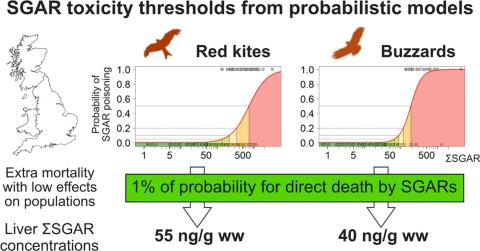
Our results indicate that, assuming 1% extra mortality as a negligible effect on population size, the toxicity threshold values for red kites and buzzards are respectively 55 and 40 ng/g wet weight of the sum of liver SGAR residues. Moreover, the estimated threshold values for red kites, but not for buzzards, increased significantly over the years, suggesting a decrease in red kites' susceptibility to lethal toxicosis. Although the reason for this trend is unclear, our findings will contribute to the conservation and protection of wild predatory birds from health risks posed by pesticide exposure.
“This is a great example of bringing data together from multiple agencies and organisations to address the need for better chemicals management.” commented Lee Walker, principal researcher for the PBMS. “This study has used data and samples generated through the PBMS, the Wildlife Incident Investigation Scheme and the Wildlife Disease Risk Analysis and Health Surveillance run by the Institute of Zoology to help us develop a way to better interpret the concentrations of rodenticides we find in our wildlife”.
For the full text of the paper, see here.
For all of our papers, see Scientific papers webpage.